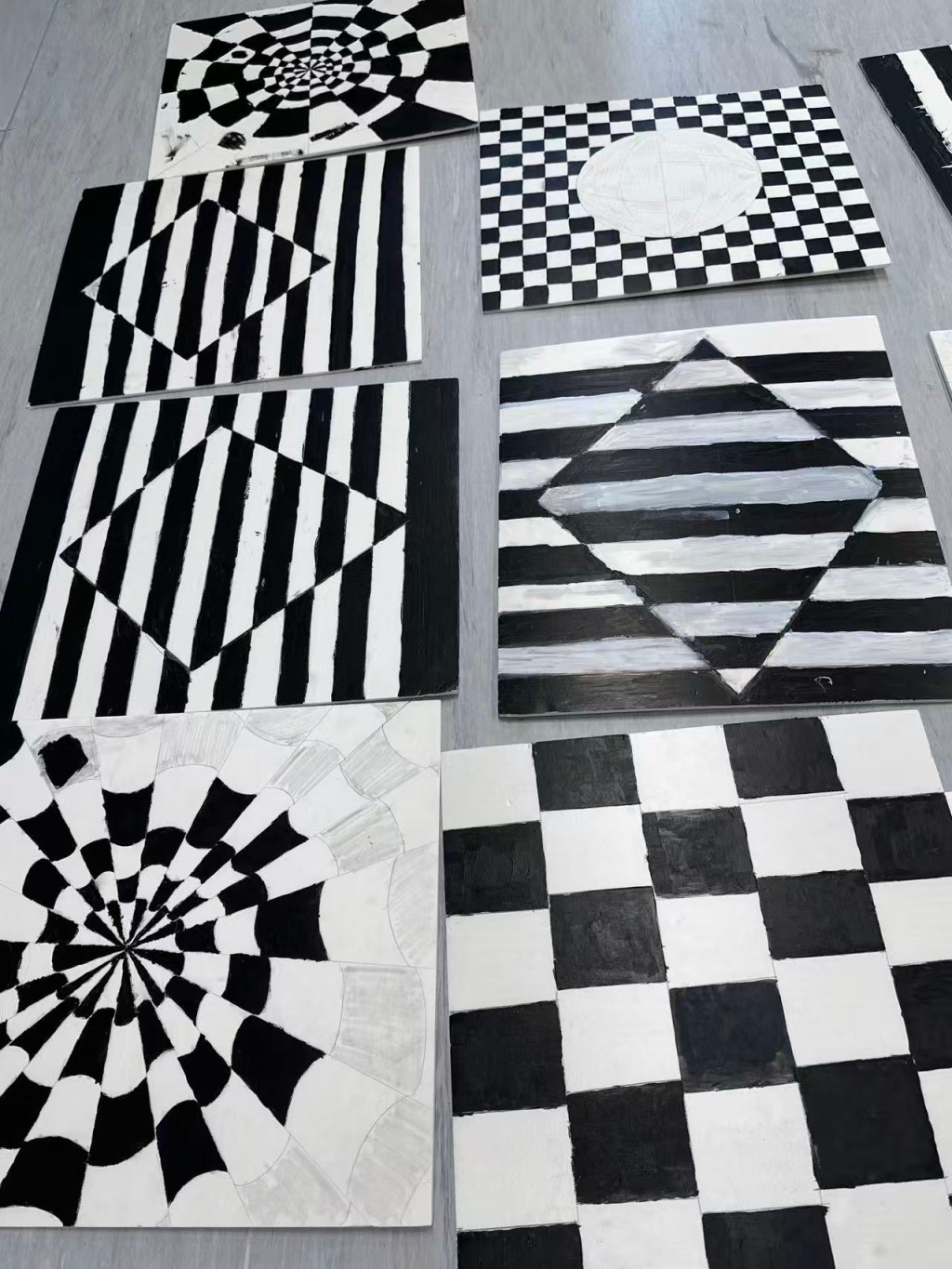
Optical illusion art has become one of my favorite middle school projects because it combines structure, creativity, problem-solving, and just enough frustration to make students feel genuinely accomplished when it finally works.
And because my class is a mix of students with varying abilities, I designed worksheets that help scaffold skills and provide differentiation.
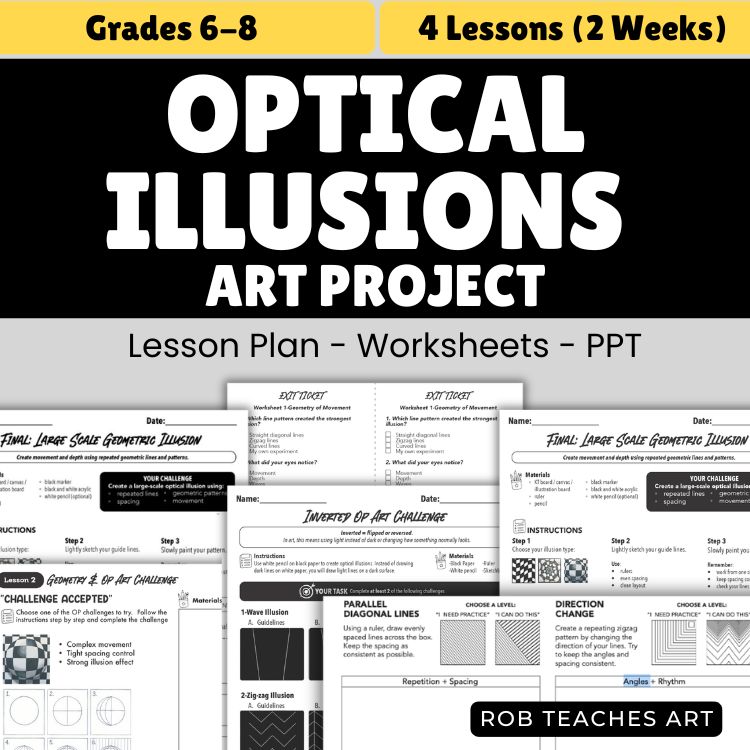
Lesson Overview (4 Lessons | 45-50 mins)
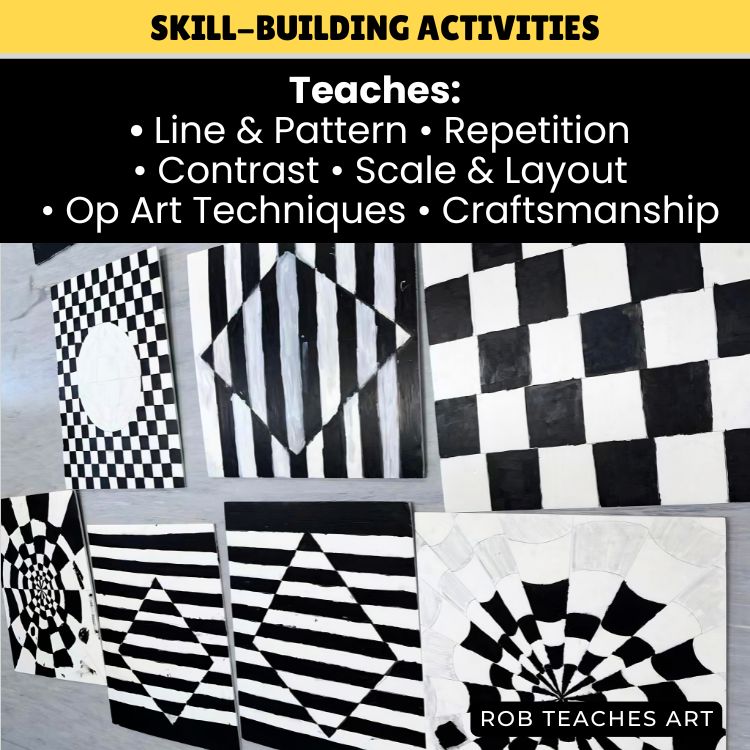
Lesson 1: Geometric Line Experiments
We start with simple line exercises and pattern experiments.
Students explore how repeated lines, spacing, direction changes, and curves can create movement and visual effects. Instead of jumping directly into a final artwork, this lesson gives students small wins early while introducing important concepts like repetition, contrast, and precision.
This is where students would begin to realize that precision and spacing are important!
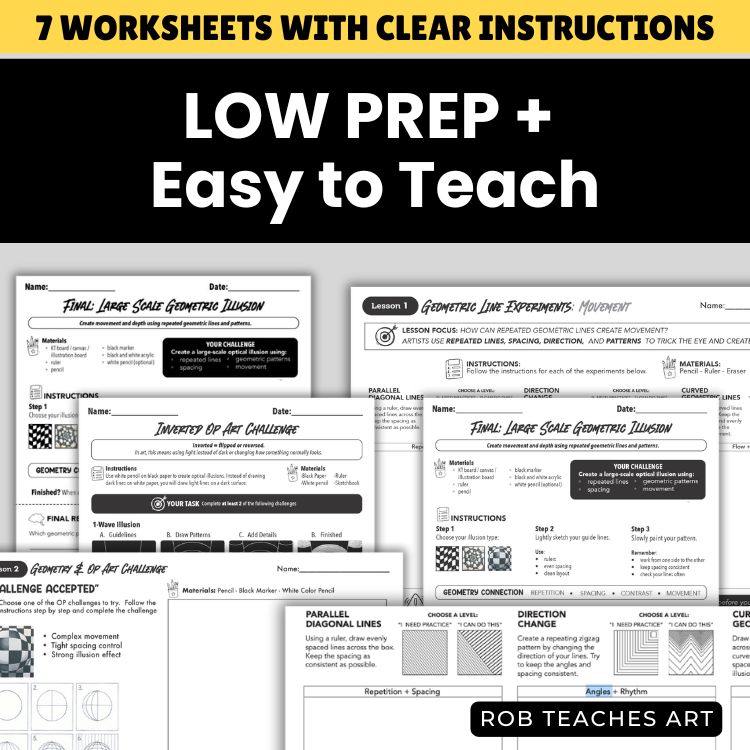
Lesson 2: Op Art Challenge Activities
Once students understand the basics, we move into guided Op Art challenges.
Students choose different illusion designs based on their confidence level and begin creating more complex geometric patterns and movement effects. I included differentiated challenge levels because middle school skill ranges are always all over the place.
Some students want safe and structured or are a little more laid back.
Others want more challenge.
This lesson also helps students build patience and control because they quickly learn that messy spacing weakens the illusion effect.
Lesson 3: Building the Large-Scale Optical Illusion
This is where students will apply the skills they’ve been working on in the past lessons.
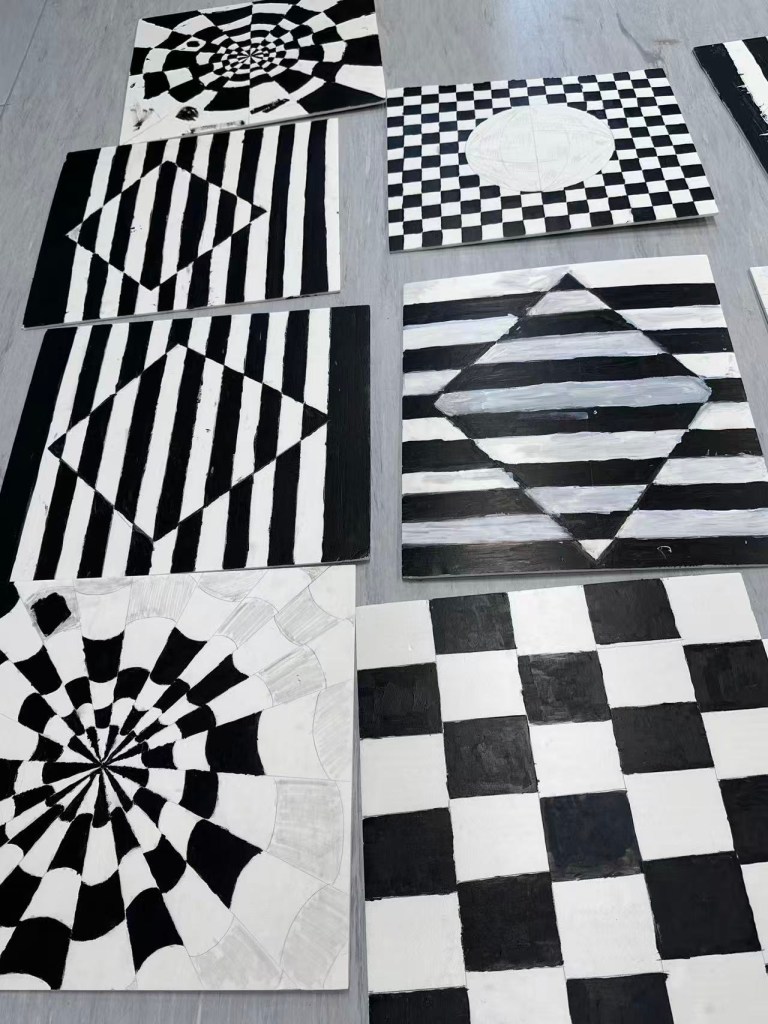
Students select an illusion style and transfer it onto a larger surface like foam board, canvas board, or illustration board. Scaling up introduces a completely new challenge because spacing, symmetry, and line consistency become much harder to control.
Here are some of my students’ work in progress:
Lesson 4: Final Details & Inverted Illusion Challenge
The final lesson focuses on refining the artwork and strengthening contrast using black paint or markers.
Early finishers also complete an inverted illusion challenge where they create white-on-black illusion drawings instead of traditional black-on-white designs.
This ended up becoming one of the students’ favorite extension activities because it completely changes how they think about contrast and negative space.
Materials I Use for This Project
These are the supplies that worked best in my classroom:
- Mechanical Pencils – Pentel Mechanical Pencils
- Fine Line Markers – Sharpie Fine Point Markers
- Black & White Acrylic Paint – Apple Barrel Black & White Acrylic Paint
- White Colored Pencils – Prismacolor White Colored Pencil
- Rulers – Westcott Rulers
- Foam Boards 30 x 40 – Foam Boards for Art Projects
- A4 Black Paper – Black Construction Paper
- Sketchbooks – Arteza Sketchbooks
Download Full Project Materials


Leave a comment